
Principles of Ayurveda
Ayurveda, the ancient science of life, originates from the Indian subcontinent and is revered as one of the oldest holistic healing systems. Rooted in the belief that health is a delicate balance between body, mind, spirit, and the universe, Ayurveda offers a comprehensive approach to well-being.
Ayurvedic principles serve as a timeless guide, providing insights into maintaining holistic well-being through an understanding of our unique constitution and harmonising with the ever-changing seasons. By embracing Ayurvedic principles, individuals can cultivate balance, vitality, and longevity in their journey toward health and harmony.
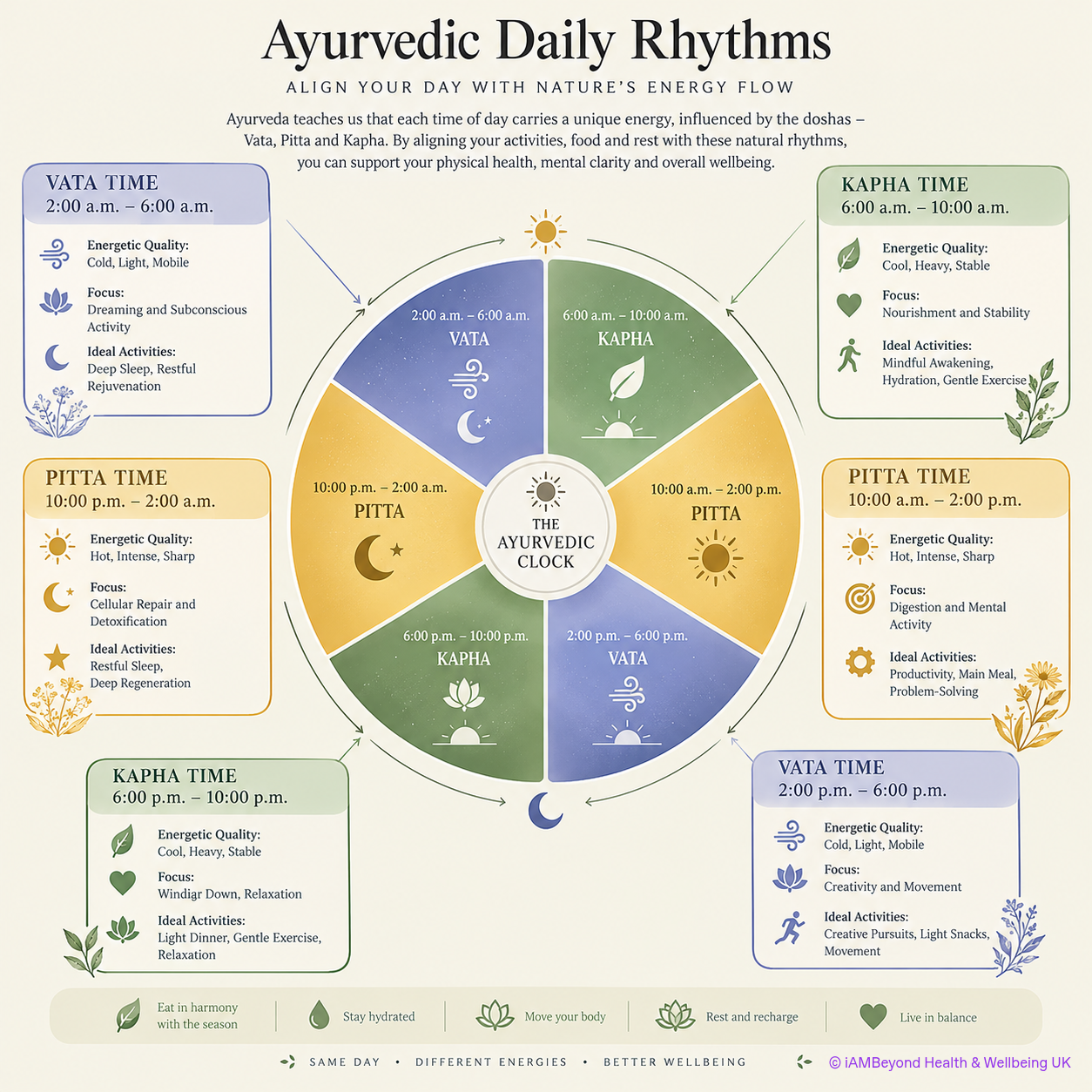
Ayurveda recognises the five elements – Earth, Water, Fire, Air, and Ether – as the building blocks of the universe. These elements manifest in our bodies as three primary energies, known as doshas. These building blocks make up everything in our existence, and govern the way in which these interact with each other.The doshas, Vata, Pitta, and Kapha, represent the dynamic forces that govern our physiological and psychological functions. Understanding one's unique doshic constitution is fundamental to Ayurvedic practices.
Ayurveda's main aim is rooted in achieving and maintaining harmony among the doshas to promote overall well-being. Lifestyle choices, diet, and practices should all be tailored to one's dosha in order to help restore balance and achieve optimal health, both inside and out. Another important part of this goal is to live in line with the seasonal changes of Nature's energies.
In the ancient science of Ayurveda, the approach to well-being extends beyond individual constitutions to include the ever-changing influence of the seasons. Rooted in the belief that the balance of the doshas—Vata, Pitta, and Kapha—is vital for overall health, Ayurveda provides a unique perspective on navigating the varying energies of each season
Autumn and Early Winter
Vata (Air and Ether): As autumn heralds the transition from warmth to coolness, Vata tends to increase. To counterbalance the dry, erratic qualities of Vata, Ayurveda recommends warm, nourishing foods, grounding practices like meditation, and self-care routines to maintain stability.
Late Winter and Spring
Kapha (Earth and Water): Spring marks the Kapha season, characterized by dampness and coolness. Ayurvedic practices include incorporating warming spices into meals, engaging in invigorating exercises, and embracing a sense of renewal to balance the slow and steady Kapha energy.
Summer
Pitta (Fire and Water): Summer, with its fiery intensity, corresponds to an increase in Pitta. To pacify excess heat, Ayurveda suggests cooling foods, staying hydrated, and engaging in calming activities. Embracing the slower pace of life during summer fosters a harmonious Pitta balance.
Best Foods for Autumn
- Soups, stews, curries, porridge/kichari
- Root vegetables, squash, sweet potatoes
- Rice, oats and lentils
Herbs & Spices for Autumn
Naturally warming spices such as ginger, cinnamon, cardamom, cumin and fennel. These are especially important for maintaining the digestive system during the colder months.
Autumn Movement & Practices
Gentle yoga, walking, stretching, meditation and breathwork can provide grounding without over-exertion.
Traditional practices such as daily Abhyanga (self-massage) with warm sesame or almond oil, followed by a warm bath or shower, can be particularly balancing.
Best Foods for Winter
- Root vegetables, beans, lentils, grains, cooked greens
- Soups, stews and warming curries.
- Healthy fats such as sesame oil, olive oil, ghee or coconut milk, in moderation
Herbs & Spices for Winter
Spices including ginger, black pepper, cinnamon, clove, turmeric and cumin, to bring warmth and vitality
Winter Movement & Practices
Abhyanga with warm sesame oil, warm baths, saunas and keeping the body well insulated can help counter the cold.
Maintain regular movement through brisk walking, strength training, dancing, yoga or other warming exercise, particularly if you feel heavy or sluggish.
Best Foods for Spring
- Emphasise vegetables, leafy greens, legumes, sprouts, berries, apples, pears and lighter grains,
- Reduce excessive amounts of very heavy, oily or sugary foods.
Herbs & Spices for Spring
Pungent and aromatic spices such as fresh ginger, turmeric, black pepper, cumin, mustard seed, fenugreek and cinnamon, to add warmth and stimulation to meals.
Spring Movement & Practices
Brisk walking, running, dancing, cycling, dynamic yoga and strength training can help shake off winter sluggishness.
Traditional Ayurvedic routines may include dry brushing (Garshana) and stimulating self-massage, followed by a warm shower.
Best Foods for Summer
- Naturally cooling and water-rich foods such as:
cucumber, melon, watermelon, leafy greens, courgette, coconut, grapes, pears, berries and fresh herbs
- Favour lighter meals such as salads, steamed vegetables, rice dishes and cooling soups,
- Reduce very spicy, fried, salty and heavily fermented foods if they leave you feeling overheated
Herbs & Spices for Summer
Coriander, mint, fennel, cardamom and rose are traditionally valued for their cooling qualities.
Summer Movement & Practices
Favour swimming, gentle yoga, walking and other activities that don't excessively overheat the body.
Spend time in nature, seek shade and avoid unnecessary midday heat.
Traditional practices such as moonlight meditation, cooling breathwork, gentle oil massage with coconut oil and quiet evening rituals can help create a sense of calm to balance the heat and movement of summer.

Trending now

![Organic Dried Moringa Leaf [Drumstick Leaf / Raktaka / Shigru]](https://iambeyondhealth.co.uk/wp-content/uploads/2026/10/media361231_ce7a8565614b43ea91e8d981b8c6f159mv2.jpg "images")
![Organic White Lotus Flower (Dried) [Nelumbo Nucifera] Pundareeka | Anxiety, Mood](https://iambeyondhealth.co.uk/wp-content/uploads/2026/10/media361231_e98261b9b49e48d79652d6e00111700dmv2-scaled.jpg "images")